High Efficiency Dual-Fuel Heat Pump System Change-Out Before and After
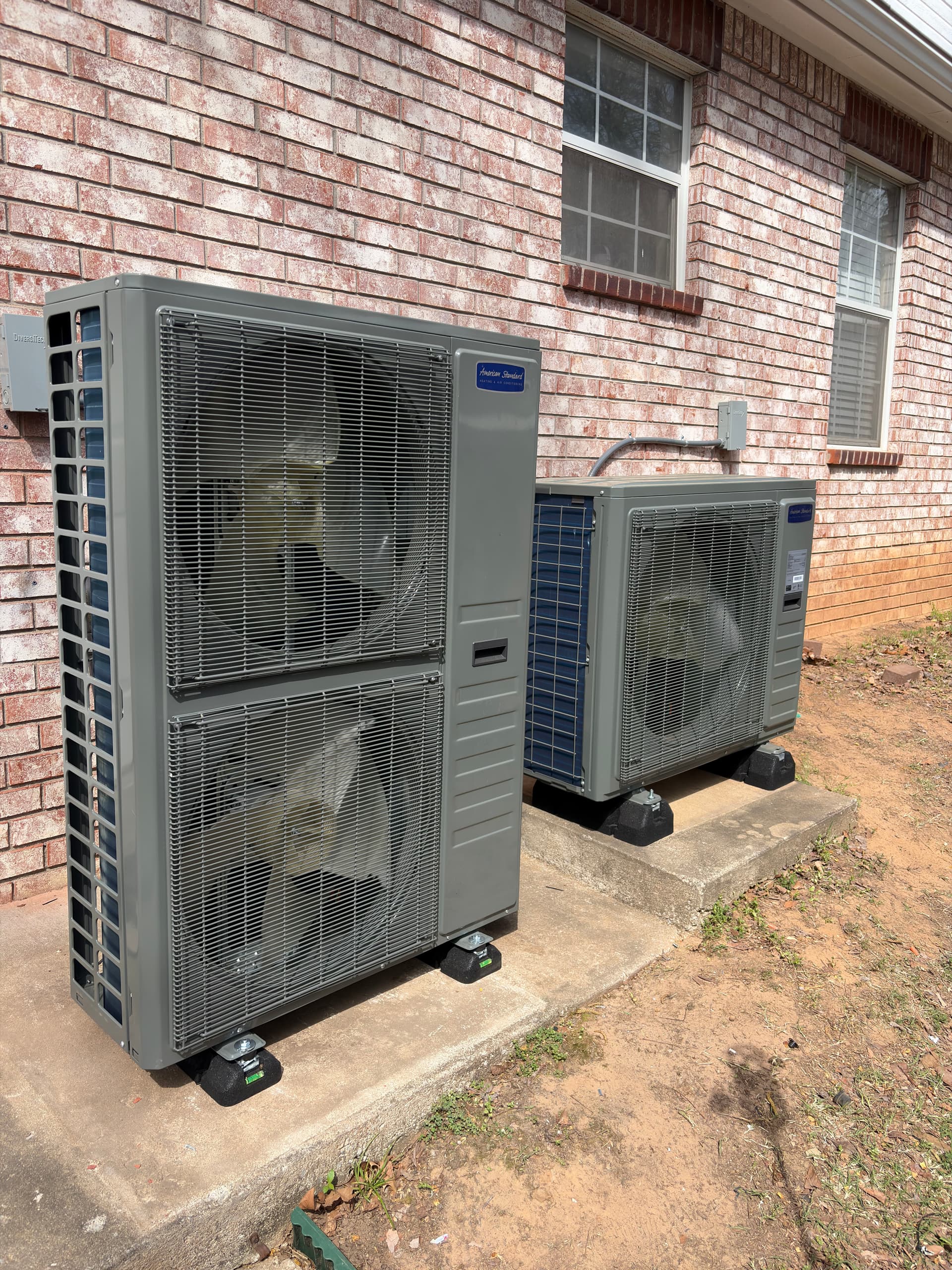
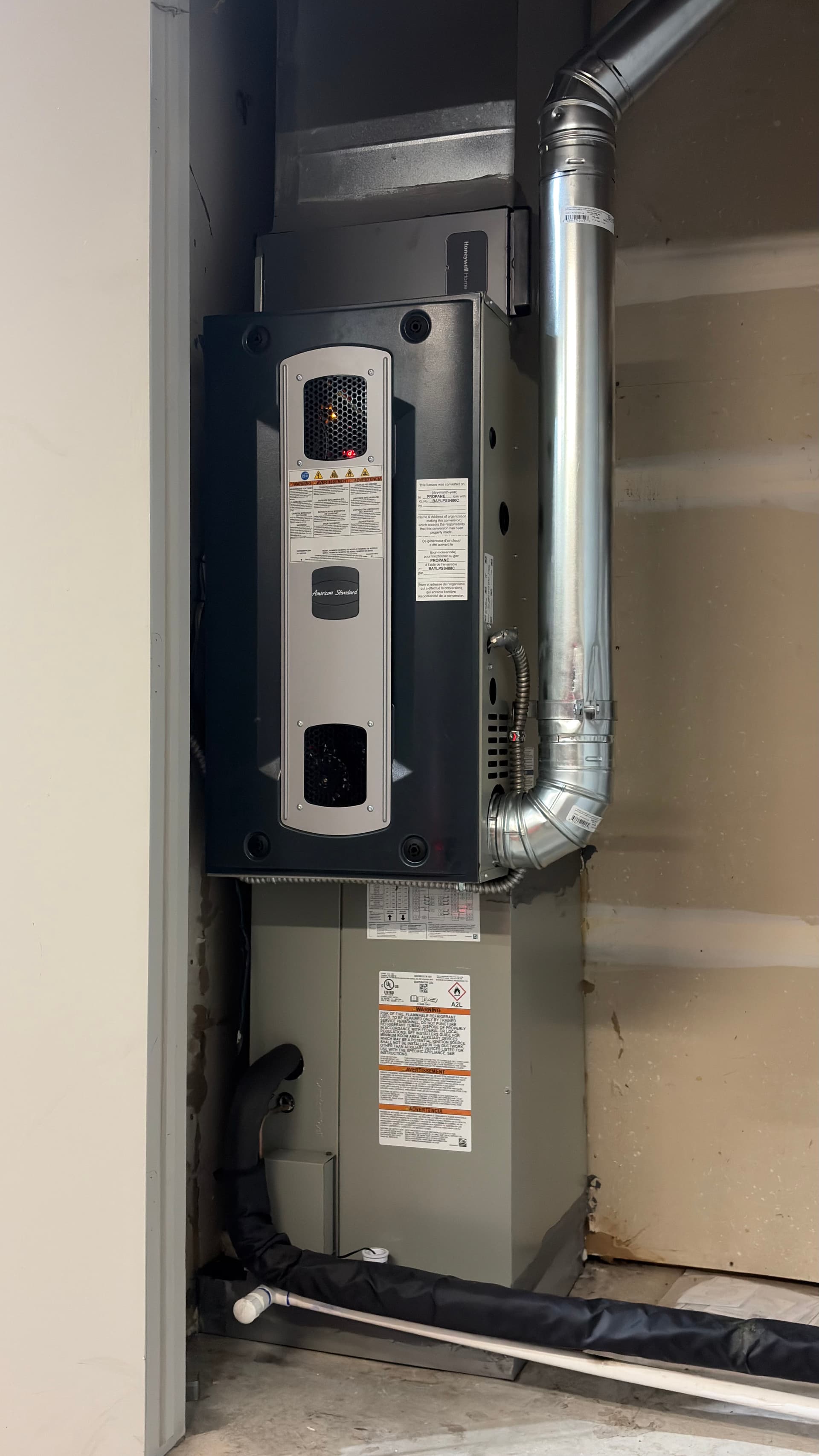
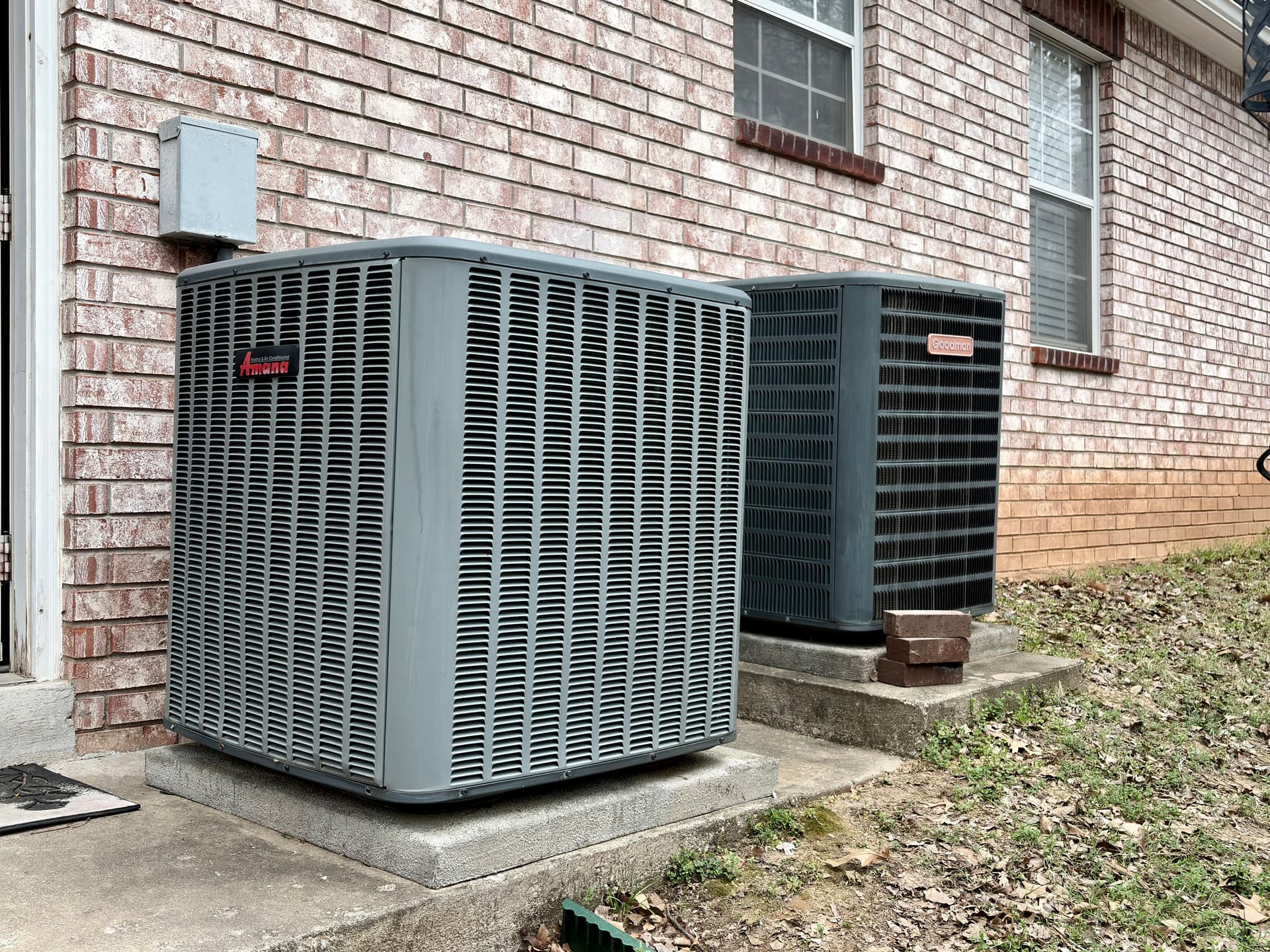
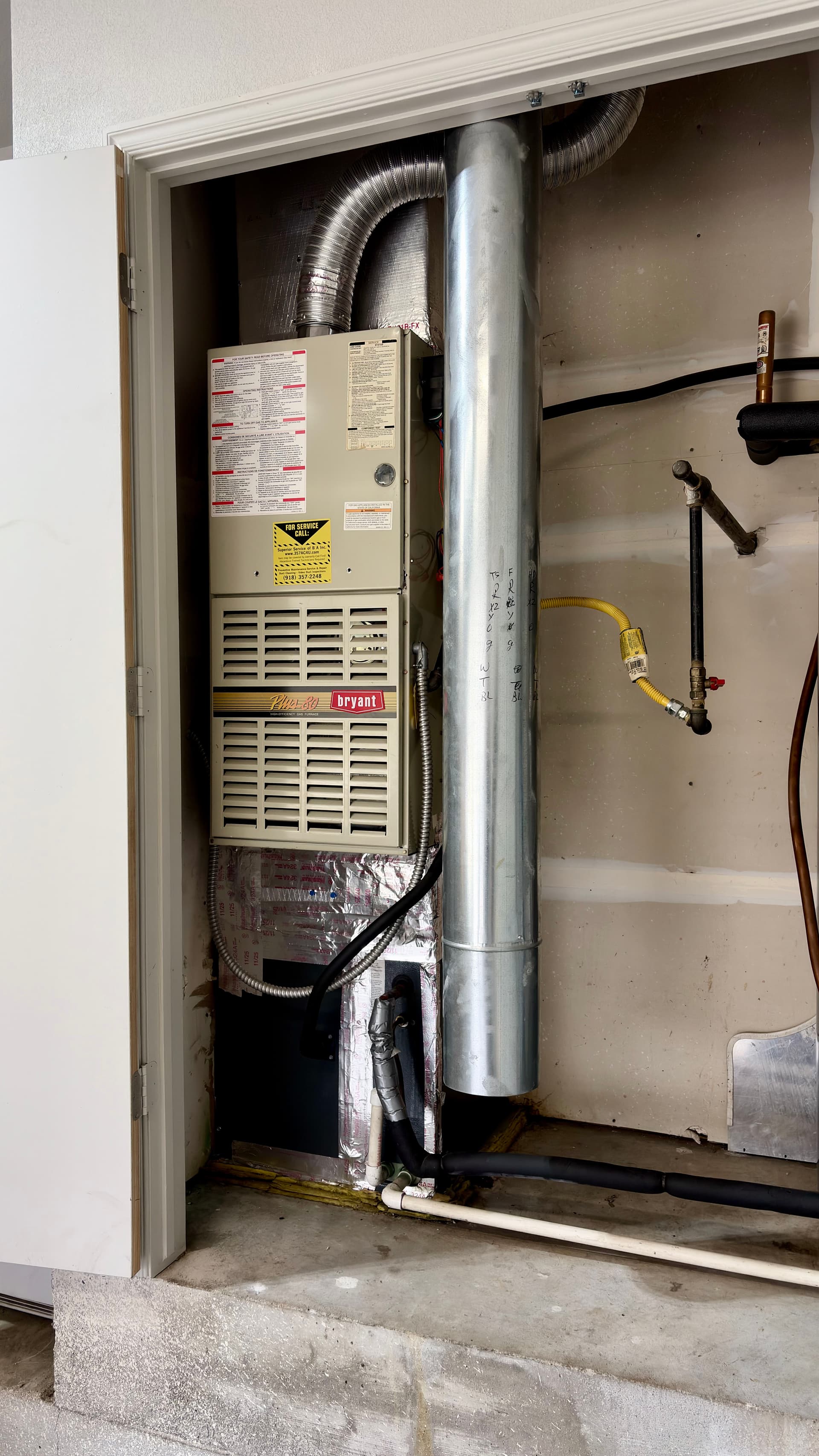
Here's what a full dual-fuel system change-out looks like from start to finish. The old setup - a pair of aging Amana and Goodman outdoor units alongside an older Bryant gas furnace - had run its course. Nothing catastrophic, just equipment that had reached the end of its useful life and was no longer doing the job efficiently.
We swapped everything out for a high-efficiency American Standard dual-fuel heat pump system with side discharge outdoor units. Two new units, properly leveled on vibration isolation pads, positioned cleanly against the exterior brick. Inside, the new American Standard air handler and furnace went in neat and tight, with all-new flue piping run correctly for safe and efficient venting.
So what exactly is a dual-fuel system? It pairs a heat pump with a gas furnace. The heat pump handles most of the heating and cooling load efficiently. When temps drop to a point where the heat pump loses efficiency, the gas furnace kicks in automatically. You get the best of both worlds - lower energy costs during mild weather and reliable gas heat when it gets seriously cold.
The side discharge configuration on these outdoor units is worth noting too. Instead of blowing air straight up, these units discharge out the side. In tight installations or areas with overhead obstructions, that matters for airflow and performance. It's not just a cosmetic detail - it affects how well the system operates long-term.
A full HVAC system change-out like this covers everything: the outdoor units, the indoor air handler, the furnace, and all the associated connections and venting. When the old equipment goes out and the new equipment goes in as a matched system, efficiency and reliability both improve significantly. That's exactly what we delivered here.